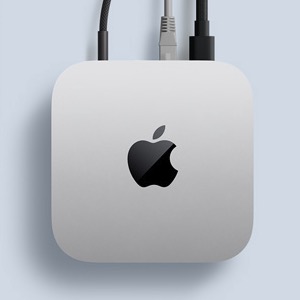
Bottom line: For cloud-API coding (Claude Code / Cursor) without local 14B+ models → 24GB is the 2026 Mac mini sweet spot. Stable Ollama 14B Q4 with IDE headroom → 32GB. 32B quant or dual models → 64GB (M4 Pro / rumored M6 Pro tier). 16GB only for minimal cloud-only dev without heavy Docker.
As of August 26, 2026, Apple has not officially announced M6 Mac mini. Current M4 / M4 Pro Mac mini offer 16/24/32GB and 24/48/64GB unified memory. This guide applies confirmed Apple Silicon memory behavior and real Ollama / Claude Code footprints to the four RAM tiers—rumored M6 specs are not facts, but soldered RAM risk is. See Mac mini specs and MLX unified memory.
Who should read this? Developers budgeting before the M6 Mac mini window; teams on M4 16GB hitting swap with Ollama; owners planning Claude Code or OpenClaw nodes who need RAM vs model size vs concurrent IDE spelled out.
Why wrong Mac mini RAM hurts more than wrong CPU
Apple Silicon uses unified memory: CPU, GPU, and Neural Engine share one pool. Ollama weights, KV cache, Claude Code’s Electron stack, Docker, LSP, and browser tabs do not get separate VRAM—they compete for 16–64GB.
Unlike many PCs, Mac mini RAM is soldered at purchase. External SSD helps model files and build caches, not RAM. Rule of thumb:
Usable RAM ≈ total − macOS baseline (4–6GB) − IDE/browser (4–10GB) − containers/DB (2–8GB) − model weights & KV cache
Yellow Memory Pressure and growing swap mean the tier is too low—a workload class problem, not chip generation. Compare form factors in our 2026 AI coding Mac guide.
How to classify workloads (What)
| Tier | Typical processes | RAM sensitivity | Floor |
|---|---|---|---|
| T1 Cloud API only | IDE + Claude Code CLI + browser + Git | Electron/LSP peaks, no big local model | 16GB tight, 24GB recommended |
| T2 Light local | T1 + Ollama 7B Q4 / embeddings | ~4–6GB model + context | 24GB |
| T3 Daily inference | T1 + Ollama 14B Q4 + Docker DB | ~8–12GB model + DB + tools | 32GB |
| T4 Lab / parallel | Dual models / 32B Q4 / finetune + simulators | Stacked weights, KV, Xcode sim | 48–64GB |
Asymmetric takeaway: Claude Code compute lives in Anthropic’s cloud—local RAM buys toolchain headroom. Ollama is the opposite: model size is RAM problem #1.
Compare 16 / 24 / 32 / 64GB
| RAM | Claude Code + IDE | Ollama | Agents / CI | Verdict |
|---|---|---|---|---|
| 16GB | Single project; Chrome swaps | 7B Q4 only; fights IDE | No Docker + build together | T1 minimal; not for serious AI dev |
| 24GB | Two projects + Claude Code stable | 7B comfy; 14B close browser | Light OpenClaw node | Cloud-API sweet spot |
| 32GB | Multi-repo + MCP | 14B Q4 + IDE; 32B tiny quant only | Postgres + Redis + agent | Daily Ollama pick |
| 64GB | IDE rarely RAM-bound | 32B Q4 / dual 14B | Simulators + local CI | Lab & team nodes |
Base M4 caps at 32GB; 64GB needs M4 Pro. If M6 repeats that split, 64GB buyers should target Pro or Mac Studio, not hope the base SKU grows. Laptops: M6 MacBook Pro wait-or-buy.
Ollama: estimating memory
Memory ≈ GGUF weights + KV cache (context) + runtime. Q4_K_M anchors (single session):
- 7B: ~4.5–5.5GB weights; tight on 16GB with IDE.
- 14B: ~8–10GB; prefer 32GB total with Claude Code open.
- 32B: ~18–22GB; usually 48GB+, 64GB safer.
- 70B: often >40GB even quantized—API, Mac Studio, or remote GPU.
Two models in parallel: add weights. Use ollama ps + Activity Monitor, not TFLOPS slides. Embedding + 14B chat is the classic 32GB combo.
Claude Code / Cursor: local RAM
- Terminal + Node/MCP: ~0.5–2GB
- IDE (Electron + LSP): ~2–6GB
- Browser docs/PRs: ~2–4GB
- Docker Desktop: ~2–8GB
Cloud inference does not make 16GB a long-term AI dev config. MCP chains blow past 12GB easily. Split subscription vs hardware: Claude Code monthly cost. Route repo writes to disposable Cloud Mac nodes; see pricing.
Decision matrix
| If you are… | RAM | Why |
|---|---|---|
| Side project, API-only, no Docker | 24GB | IDE + browser peaks |
| Full-stack + local 14B RAG | 32GB | 14B + DB + IDE together |
| Claude Code + occasional 7B | 24GB | Small local model |
| Always-on Agent + local model | 32–64GB | Daemons + tools + weights |
| 32B / dual-model lab | 64GB Pro | Base 32GB insufficient |
| Uncertain 6-month load | Rent Cloud Mac first | One week same repo |
| Need mobility | MacBook Pro | Same RAM logic, different form |
Recommended stacks
A — Cloud API dev: 24GB mini + external SSD; Claude Code + Cursor; skip full Docker locally.
B — Local RAG prototype: 32GB + 1TB SSD; Ollama 14B Q4 + pgvector + Claude Code review; accept when Pressure stays green, swap <2GB for 1h.
C — Team node: 64GB M4 Pro or Studio; OpenClaw + Ollama + shared cache; SSH/VNC ops.
Pitfalls
- “Claude Code is cloud, 16GB is fine” — ignores IDE/MCP peaks.
- “7B is 4GB so 16GB runs 14B” — ignores KV, macOS, LSP, Docker.
- “External SSD = RAM” — swap kills inference and builds.
- “M6 will need less RAM” — models grow too; tiers stay.
- “64GB future-proofs everything” — 70B+ still exceeds mini; rent spikes via help center.
7-step acceptance
- Inventory 72h of real processes.
- Measure Pressure and swap on current or Cloud Mac.
- Map to T1–T4 tier.
- Add 20% headroom for more MCP tools.
- Check Apple SKU caps (32GB base vs 64GB Pro).
- Compare rent vs buy on Mac mini rental.
- Re-test 7 days after delivery with same
ollama run.
FAQ
When is M6 Mac mini coming?
No Apple confirmation as of Aug 26, 2026. Bandwidth may rise; new RAM tiers are unconfirmed. Decide on M4 tiers + measured load.
Can 16GB run Claude Code?
It launches; not recommended long-term for AI dev with Chrome, Docker, or multi-MCP.
Is 32GB worth the uplift from 24GB?
If you run Ollama 14B or local DB, 32GB is usually cheaper than replacing the machine. API-only disciplined tabs: 24GB OK.
Ollama vs MLX RAM?
Similar for same GGUF size; pick on ecosystem. Size tiers by weights + context.
One 64GB or several 24GB for a team?
Parallel CI/agents: many isolated nodes; one 64GB for centralized inference experiments.
M6 rumors vs what you can buy today
Supply-chain and press leaks suggest M6 Mac mini may ship with higher memory bandwidth and possibly a wider Pro tier—but Apple has not confirmed SKUs, price steps, or RAM ceilings as of August 26, 2026. Practical buyers should anchor on shipping M4 / M4 Pro configs while using the workload tiers above as a decision framework that survives chip renames.
If M6 base models still cap at 32GB unified memory, the same rule applies: 64GB buyers must budget for Pro or Studio class machines, not hope for a post-purchase RAM module. Waiting for M6 without a measured pain point only makes sense when your current Mac still meets deadlines and you are not paying cloud or rental overflow every month.
For teams comparing capital expense vs subscription, pair this RAM guide with Claude Code subscription math and Mac mini pricing: hardware RAM is a one-time gate; API spend scales with usage.
What to watch in Activity Monitor (acceptance signals)
- Memory Pressure — green under your heaviest 60-minute script; yellow during builds is OK if it returns green idle.
- Swap Used — occasional spikes during Xcode archive are normal; sustained >5GB during Ollama + IDE means tier too low.
- Cached Files — high cache is fine on Apple Silicon; do not confuse it with free RAM.
- Window > GPU History — if inference is GPU-bound, more RAM alone will not raise tokens/sec; it only prevents eviction.
Record screenshots during a realistic work session and attach them to your procurement doc—finance teams understand swap graphs better than “it feels slow.”
Conclusion
The split is not cheapest SKU—it is T1 cloud API vs T3 local 14B. 24GB for most Claude Code devs; 32GB for daily Ollama; 64GB for 32B and parallel labs. Before you buy, run one hour at full load and watch Memory Pressure—not keynote slides.
Ask: With Claude Code, 14B Ollama, and Docker open, does swap stay under 5GB? If not, pick 32GB+ or validate on a remote Mac first.
Weiterlesen
RAM zuerst auf Cloud Mac testen
Vor der M6-Mac-mini-Bestellung: gleiches Repo, Ollama-Modell und Claude-Code-Session auf einem Remote-Mac nahe der Zielkonfiguration — Memory Pressure und Swap beobachten.