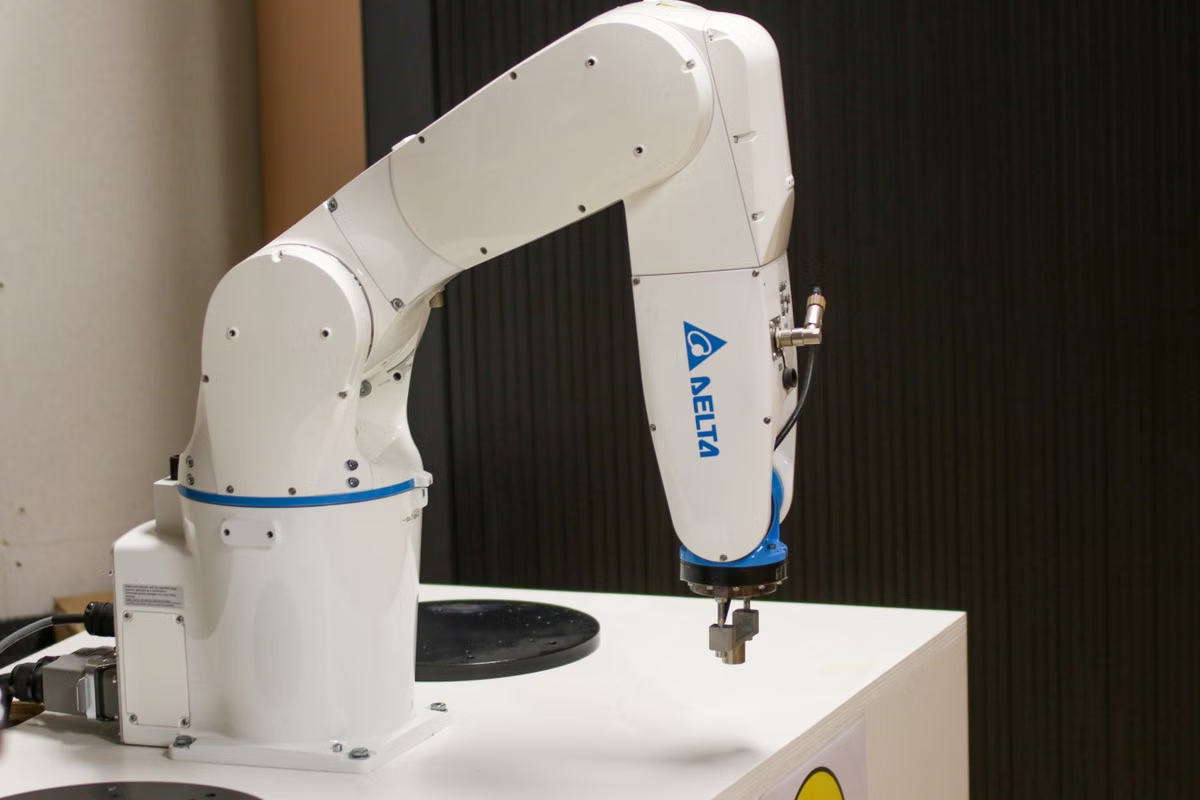
The likely shift around NVIDIA GTC Berlin 2026 is from treating compute mainly as a way to train larger models toward balancing efficient inference, continuously running AI Agents, and robotics workloads split across cloud, edge, and local systems. Keep GPU capacity in the plan, but allocate it by workload and location rather than assuming every task belongs in a larger training cluster. This is a trend analysis, not a confirmed conference announcement.
This preview is for technical leaders planning AI infrastructure or compute budgets, engineers building AI Agents, Open Models, or robotics systems, and industry observers tracking the event. It helps separate documented information from workload-based inference.
Decision: plan for a mix of training, inference, orchestration, and edge workloads; revise that plan only when official materials confirm what is actually announced.
Last updated: June 2025. Verification basis: NVIDIA’s official GTC FAQ and session catalog, plus the technical references cited below. Event logistics and future announcements should be checked against current official materials; this article does not assume an unverified schedule, speaker list, or product launch.
Start by separating event facts from workload analysis
A preview is useful only if it distinguishes what the event has confirmed from what infrastructure teams can reasonably anticipate. The official FAQ and session catalog are the sources to consult for confirmed event details and listed sessions. A workload forecast is different: it draws on how systems are built and deployed, and should not be mistaken for an official NVIDIA roadmap.
The analysis here uses three questions:
- What work must the system perform? Training, serving model responses, coordinating tools, or operating a robot are different jobs.
- Where must that work run? Cloud, edge, and local environments have different latency, data-handling, availability, and operational constraints.
- How often and for how long does it run? An occasional training job has different service-continuity needs from inference that responds to live requests or an Agent that remains active through a task.
That framing matters more than guessing a product announcement. If a conference session describes a new capability, the practical question is still whether it changes a workload’s compute, memory, network, or deployment requirements.
Trace GPU demand from training into inference
Training and inference both rely on accelerated compute, but they create different resource profiles. Training runs update model parameters and often need substantial compute and memory over a sustained job. Inference serves outputs from a model that has already been trained. Its infrastructure must handle request patterns, response-time targets, memory use, and service availability.
This does not mean that inference replaces training. Continued model development, fine-tuning, evaluation, and training new capabilities can still require substantial accelerator capacity. A more plausible shift is that infrastructure plans must serve both: training capacity for development cycles and inference capacity for models used in products and operations.
NVIDIA’s inference reference architecture is a useful technical reference because it treats inference as a serving system, not simply an isolated accelerator. For a buyer or platform team, that distinction changes the questions to ask. Accelerator time is one cost item; memory, storage, networking, deployment, and keeping a service available are others. A nominally capable GPU does not by itself guarantee that a production endpoint will meet its response-time or reliability requirements.
A practical forecast for GPU demand therefore has two parts:
- Training demand remains tied to model development. It may rise, fall, or change with project scope; the trend cannot be inferred from a conference preview alone.
- Inference demand depends on usage and serving design. More requests can increase compute needs, while batching, model selection, caching, and request scheduling can change how much infrastructure each request consumes.
- Service continuity adds operational load. Monitoring, deployment, capacity management, and recovery matter when models must remain available, even though those tasks are not all GPU computation.
The decision is not “training or inference.” It is how much of the compute budget to reserve for each workload, and what evidence would justify changing that split.
Map Agent work across model calls and supporting services
An AI Agent can involve a model, but it is not only a model call. A task may require interpreting instructions, carrying context forward, choosing a tool, waiting for an external service, evaluating the result, and deciding whether another step is needed. These stages create a mix of accelerator work and conventional service load.
NVIDIA’s overview of Agentic Inference provides background on inference for Agent-style systems. For infrastructure planning, separate the load into two groups:
- Model-serving work: generating, ranking, or evaluating responses. This may need GPU resources, depending on the model and service design.
- Workflow work: tool execution, retrieval, state management, permissions, queues, and logs. These services may need CPU, memory, storage, and network capacity without requiring a GPU for every step.
That distinction prevents a common budgeting error: assigning all Agent operating costs to GPU capacity, or assuming Agent growth has no effect because the model itself is small. A service can make several calls to a model and several calls to other systems during one user task. The count and sequence depend on the application, so no universal request multiplier should be assumed without workload measurements.
Location depends on the job. A cloud deployment can suit elastic inference and central orchestration when data policy, network conditions, and latency targets allow it. Edge or local execution can suit steps that need to remain near a device, continue through a network interruption, or avoid sending sensitive data elsewhere. Some systems will split a workflow: a local component handles immediate interaction while a remote service performs work that can tolerate network delay.
An Agent’s visible answer may be one response, but the infrastructure behind it can include repeated inference, tool calls, state, and retries. Measure those stages separately before sizing accelerators.
Compare deployment locations before choosing capacity
The table is a decision aid, not a claim that one location wins for every workload. Use it to identify which constraints matter, then test the actual system against them.
| Workload or deployment choice | Best fit when | Main constraint to verify | Compute implication |
|---|---|---|---|
| Cloud GPU inference | Request demand varies or centralized serving is appropriate | Network delay, data policy, service availability, and ongoing operating cost | Plan for accelerator use plus the surrounding serving stack |
| Local or edge inference | A task needs proximity, local data handling, or resilience to disconnection | Device capacity, updates, monitoring, and model limitations | Reserve suitable local resources and define what happens when capacity is exceeded |
| Agent orchestration | Tasks use tools, retrieval, permissions, or multi-step state | External service latency, workflow reliability, and observability | Budget CPU, memory, storage, and networking as well as any model inference |
| Robotics training and simulation | Teams need to develop or evaluate models away from the live robot | Simulation quality, data movement, and transfer to real deployment | Keep development compute distinct from the robot’s operational resources |
| Robot-side perception and control | A robot must react locally according to its validated design | Response time, safety behavior, and available onboard compute | Do not assume cloud access can replace the real-time control path |
This comparison also clarifies an important boundary: an NVIDIA GPU compute environment and a cloud Mac are not interchangeable resources. A cloud Mac can support Apple-platform development workflows, such as building and testing software that requires macOS tooling. It is not a substitute for a GPU server used for accelerated model training or inference. Teams evaluating whether a cloud Mac fits an Apple-platform build workflow can compare Mac rental plans against local hardware, while keeping that decision separate from GPU capacity planning.
Assess what Open Models change before moving inference
Open Model availability can lower the barrier to examining model weights and deploying a model under an organization’s control. That can make private inference, fine-tuning, and specialized deployments more accessible to teams that could not use a closed hosted service for every task. It does not mean every Open Model is free of restrictions, equally capable, or inexpensive to operate.
The term itself needs care. A downloadable set of weights does not automatically make a model fully open. Access to training data, code, documentation, and the permissions granted by the license all affect what a team can inspect, modify, and redistribute. The Open Source Initiative’s definition of Open Source AI offers a reference for distinguishing a broader openness claim from weights availability alone.
For infrastructure teams, check these points before treating openness as a deployment advantage:
- Confirm whether the weights are actually available and whether the license permits the intended use.
- Identify whether fine-tuning is required, or whether inference with existing weights meets the product need.
- Test memory use, response time, and serving behavior on the intended hardware. Do not infer production requirements from a model’s availability.
- Include hosting, updates, evaluation, security review, and operational ownership in the comparison with a hosted service.
The potential compute effect is conditional. More teams able to deploy models may increase demand for local and private inference, but demand will depend on model quality, licensing, hardware access, and the cost of running a reliable service. The Stanford AI Index 2026 research and development chapter can provide broader research context, but it should not be used as proof of a particular GTC announcement or a guaranteed deployment trend.
Follow the robot workload from simulation to the field
Robotics brings several compute locations into one system. Training and simulation can use centralized resources. A robot’s perception and control operate in the physical environment and may need to respond locally. Fleet analysis and model updates can involve remote systems, subject to connectivity, safety, and data requirements.
NVIDIA’s robotics and edge AI developer resources provide an official reference for development work in this area. The useful planning lesson is not that every robot needs a cloud GPU connection. It is that teams should distinguish development compute from deployed compute.
- Training and simulation: central compute can support development and repeatable tests. The team still needs to assess whether simulated behavior transfers to the physical system.
- Perception and control in the field: the acceptable response time and behavior under lost connectivity determine what must run on the robot or nearby edge system. Cloud processing cannot be assumed to replace this path.
- Model updates and fleet learning: remote infrastructure can support distributing updates or analyzing accumulated information, but teams must account for deployment validation, network access, and the consequences of a failed or delayed update.
This creates a two-sided demand pattern: centralized compute for developing and evaluating systems, and local resources for operating them. The balance depends on each robot’s design and requirements. A preview cannot establish a universal hardware choice, performance target, or deployment architecture.
Use this checklist after official materials appear
After sessions and announcements are available, classify each item before changing budgets or architecture. This prevents a forecast from hardening into a supposed fact.
- [ ] Label the source. Is the information in an official event page, a formal technical document, a media report, or an analyst’s interpretation?
- [ ] Name the workload. Does it concern training, model serving, Agent orchestration, simulation, robot operation, or an adjacent service?
- [ ] Locate the work. Does the requirement point to cloud, edge, local systems, or a split deployment?
- [ ] Check the limiting resource. Measure compute, memory, storage, networking, response time, and service continuity instead of treating “more GPU” as the default answer.
- [ ] Look for operational effects. Include monitoring, model updates, security, reliability, and data movement where they apply.
- [ ] Set an evidence threshold. Change a procurement or capacity assumption only when the announcement or a representative workload test supports the change.
For teams developing Apple-platform software alongside AI services, the development environment remains a separate decision from GPU placement. The Zutcloud help center is an appropriate next reference for cloud Mac workflow questions. That path can help with macOS development and build operations; it should not be confused with an NVIDIA GPU compute deployment.
Treat the forecast as a planning hypothesis
The shared direction across GPU, AI Agent, Open Model, and robotics workloads is likely to be more deliberate placement of compute, not a simple march toward larger training clusters. Inference may take a greater share of operational planning; Agent systems can add orchestration and repeated calls; more accessible model weights may broaden private deployment; and robotics can split development work from local operation. Each remains conditional on real workloads and confirmed capabilities.
Before adjusting infrastructure, compare the current approach with the workload it must serve. A single local machine can be difficult to scale for shared services, needs local maintenance, and may not meet the requirements of a GPU-heavy model workload. A remote GPU service may provide accelerated compute but does not supply a macOS build environment or remove network and operational constraints. A cloud Mac addresses a different need: Apple-platform development and build workflows, not NVIDIA GPU training.
If the next task is an Apple ecosystem build or test workflow, renting a Mac from Zutcloud may be a more suitable fit than repurposing GPU infrastructure or relying on one developer’s local machine. If the task is model training or accelerated inference, select GPU resources based on those measured requirements instead. Revisit the official GTC materials as they become available, then update the decision according to workload type, latency, and deployment location.
Turn the GTC Outlook Into Your Next Infrastructure Test
Read more Zutcloud technical guides to work through GPU inference, AI agent, open model, and robotics deployment questions.
Benchmark your target models and workflows to identify their compute, memory, and latency requirements. Order now